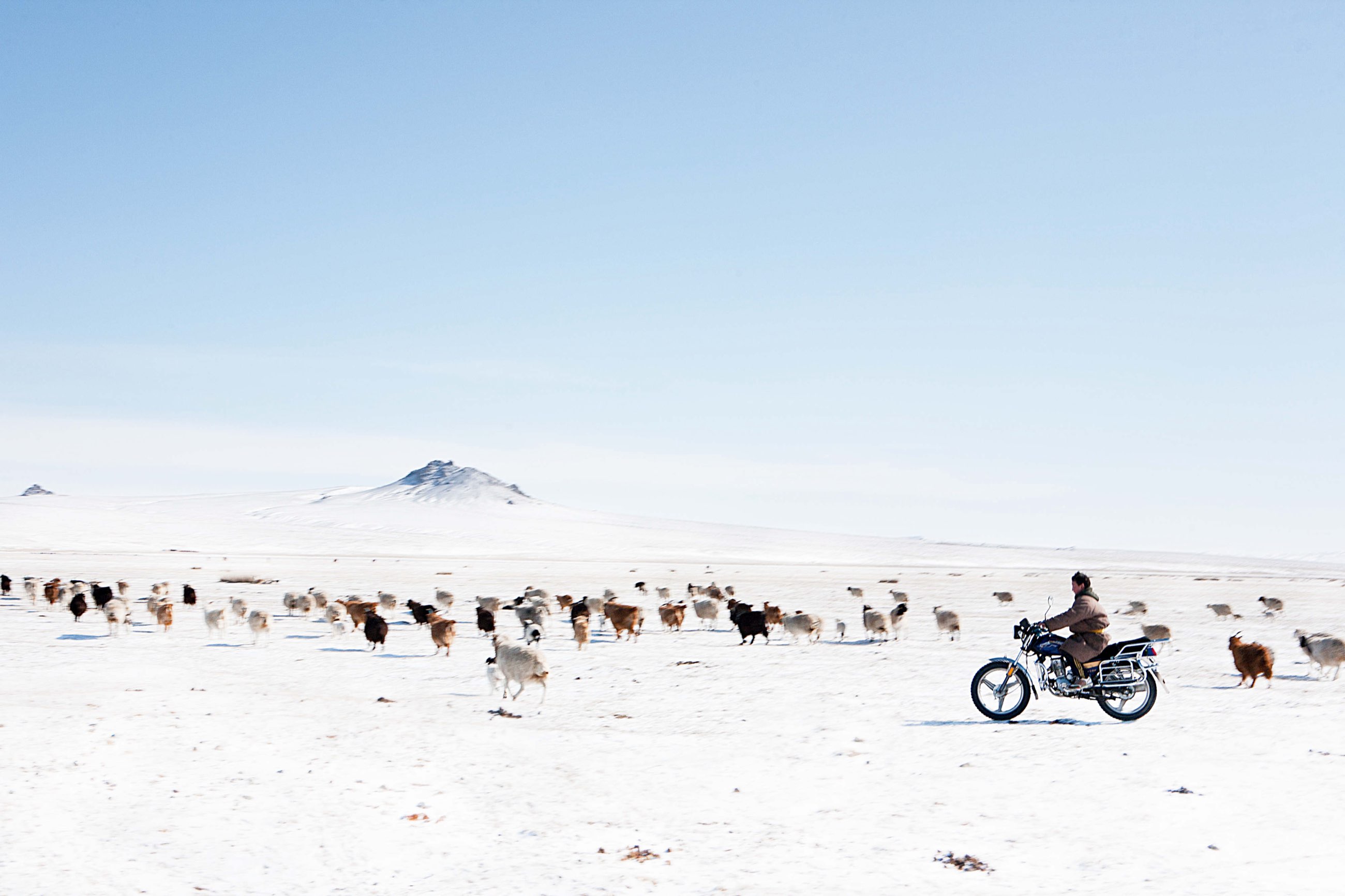
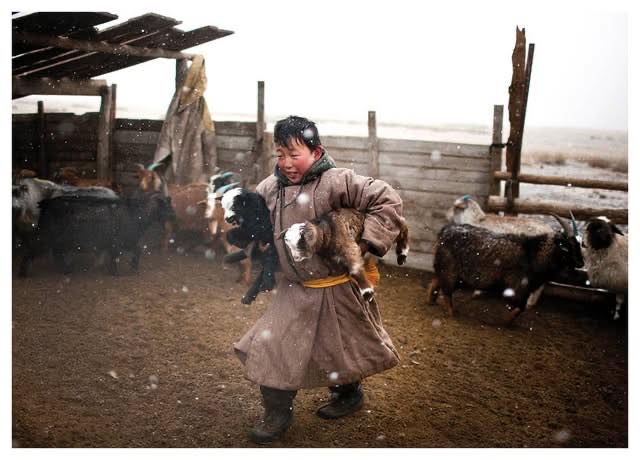
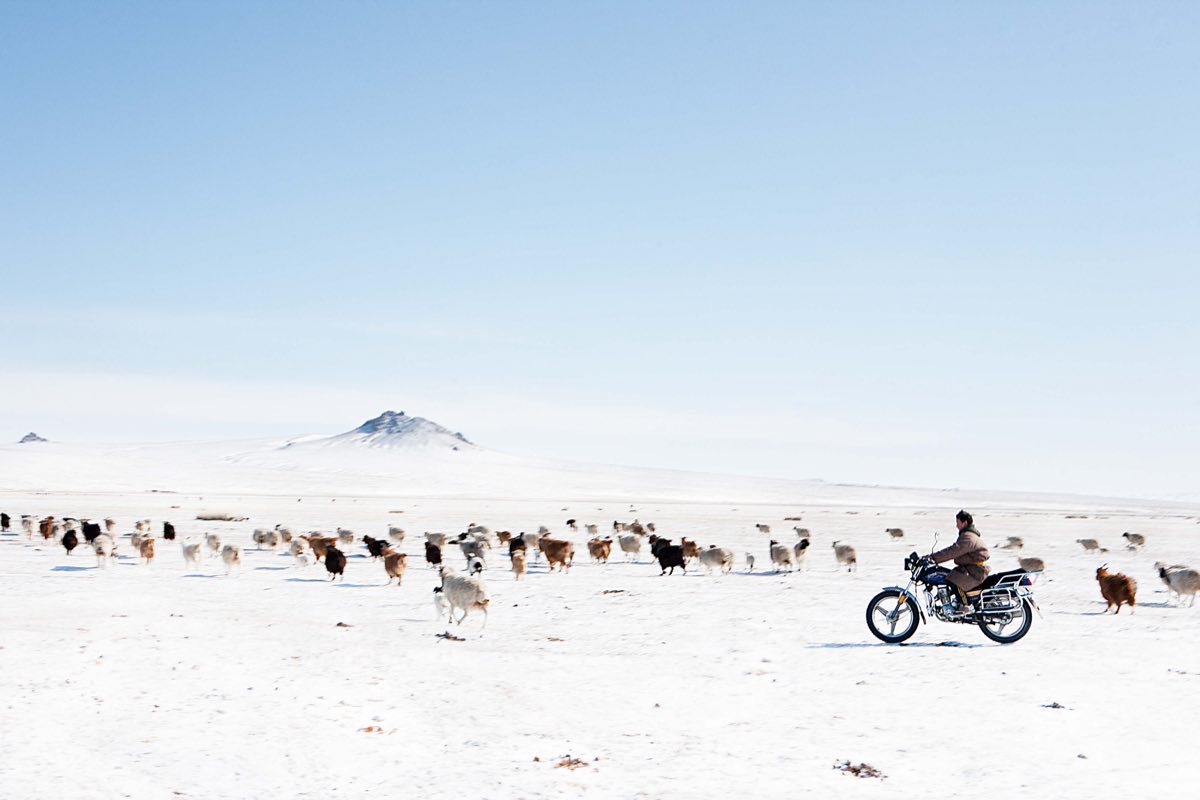
A young nomad herds his animals by motorcycle after an early spring snowstorm. Mongolian herders adopt technology quickly and it is not uncommon to see trucks and motorcycles replacing work animals.
After an overnight snowstorm, a nomad brushes snow off of his solar unit, which powers the lightbulb, TV, and cell phone in his ger (yurt).
In the countryside, where entertainment is hard to come by, televisions are nearly ubiquitous. In many houses, the TV's stay on all day, getting their charge from solar units.
Young jockeys, horse owners, and spectators gather before a horse race during Naadam, the traditional Mongolian festival of the 'three manly sports.'
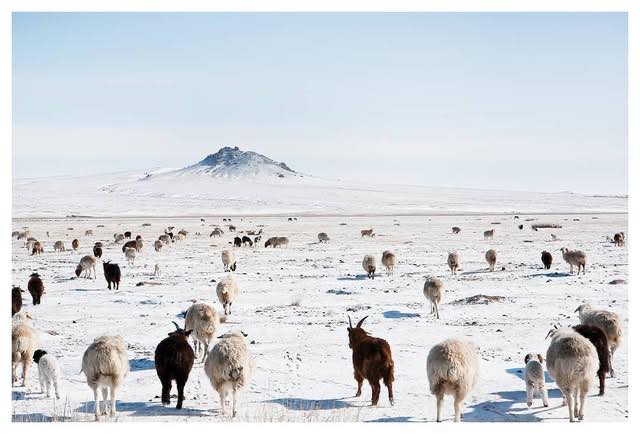
Goats in the Gobi Desert drink from a generator-powered washing machine.
Two wrestlers compete at a small Naadam festival in the countryside. Naadam was traditionally a celebration of victorious conquests, but in the Soviet era, the celebration was organized into a yearly, nationwide festival.
Two Mongolian youth slaughter goats and sheep at a countryside resort for wealthy city dwellers. Mongolian men slaughter these animals by making a small incision in the chest , reaching into the cavity, and pinching or snapping the aorta so the animal bleeds out internally.
Herders and scientists agree that weather patterns in Mongolia are shifting, leading many to rethink their nomadic lifestyle. Decreased precipitation and stronger winds, a product of climate change, has led to the erosion of fertile topsoil and the expansion of the Gobi Desert.
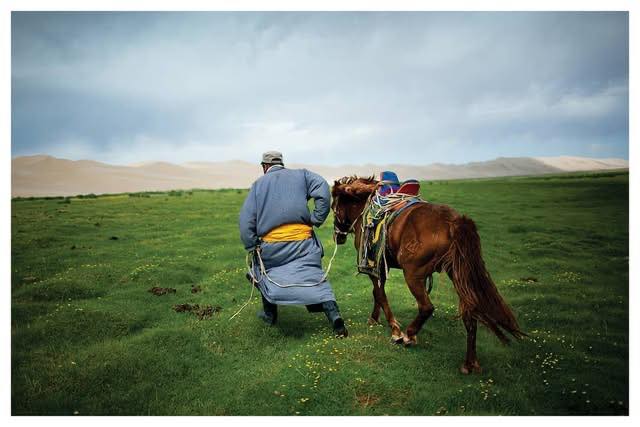
A herder rides out to collect his animals during a snowstorm. Over the past decade, Mongolia has experienced an uncommonly high number of dzud - severe winters that decimate herd populations.
In Azraga soum (county), a pile of bones from animals killed during the 2010 dzud lies on the frozen ground. Azraga has been especially unlucky. The winter of 2012 was relatively mild in most of Mongolia, but in this region, a localized dzud killed an estimated 30 percent of the livestock.
After the closing of a large, Soviet coal mine in Nalaikh, a town about 35 kilometers from Ulaanbaatar, many small mining operations took over. These small mines often employ herding families who have had to give up life on the steppe.
Mining, though dangerous, is an attractive option for former herders whose levels of education often don't extend beyond grade school.
Most herders who have given up their nomadic lifestyle move to Ulaanbaatar, Mongolia's political and financial center. The ger districts that ring Ulaanbaatar house roughly 70% of the city's population. During the winter, Ulaanbaatar is the second most air-polluted capital in the world due largely to the burning of coal in these districts.
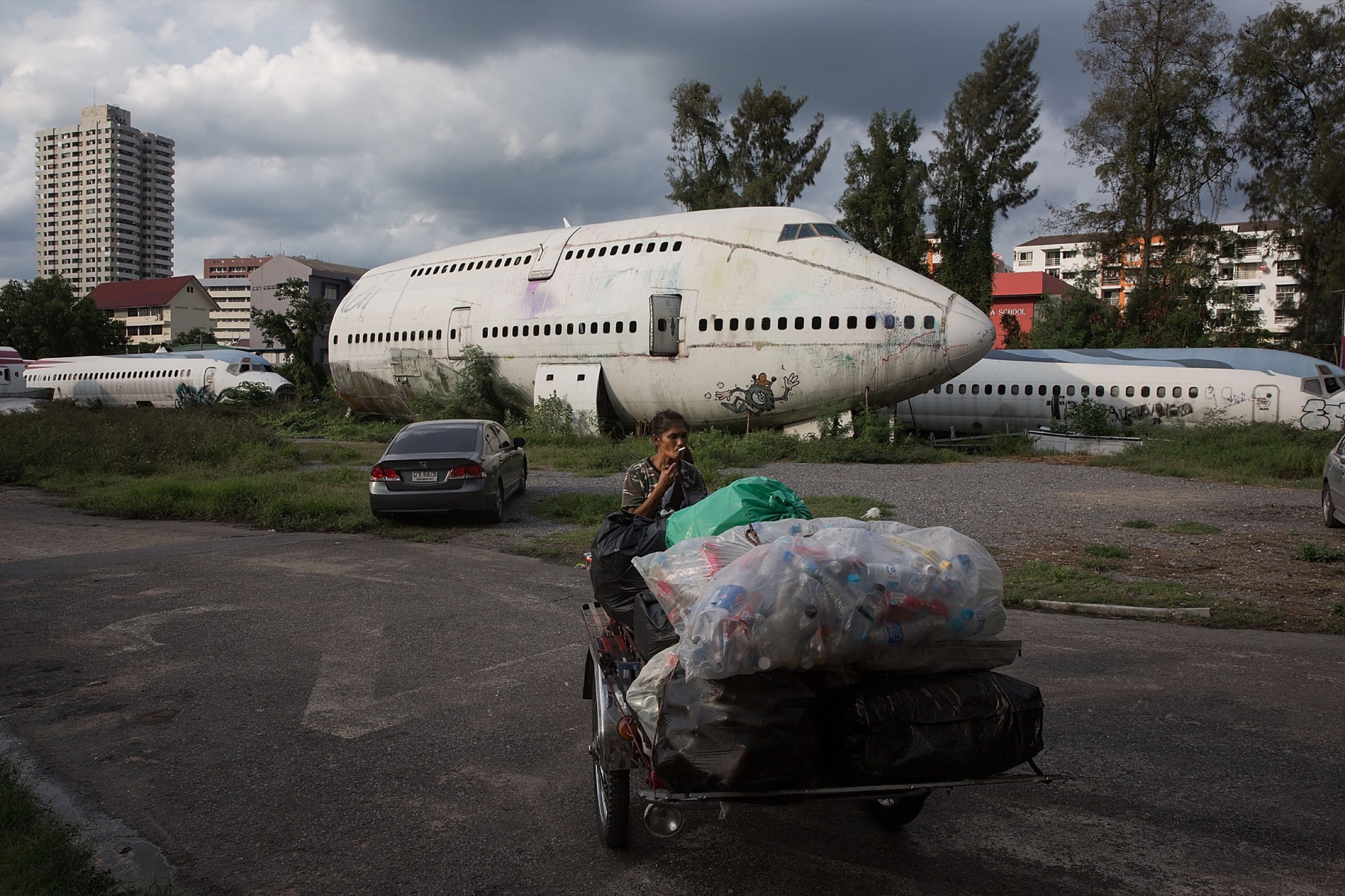
Residents of the ger districts collect recyclable and resellable materials from a trash dump in Ulaanbaatar. Unemployment in the ger districts hovers around 16 percent.
A Mongolian boy brings water to his home in the ger district. Housing 70 percent of the city's population, these areas have no sanitation services or running water and have high rates of unemployment, alcoholism and crime.
Constructions sites in Ulaanbaatar, like this one near the Children's Park, rise quickly during the summer months - before the long, cold winter makes work impossible. Alongside private enterprises, the Mongolian government plans to build 100,000 new housing units for low-income families.
A mother administers an IV for her son. In the Soviet Era, modern medicine was introduced to Mongolia, decreasing infant mortality and increasing life expectancy. These factors have led to a population boom since the early 20th century.
Two young men help their drunk friend to a waiting car. In 2006, a joint Mongolian Ministry of Health/World Health Organization study found that 22 percent of Mongolian men were dependent on alcohol--3 times higher than in Europe.
A woman stretches on a hilltop overlooking Ulaanbaatar's sprawl. With the fastest growing economy in the world and a constant stream of rural-to-urban migrants, Mongolia's capital is expanding quickly.